Hidden cost of spiralling non-tariff measures
UNCTAD: Analysing the rising toll of global trade compliance
By Carly Fields
While the world’s attention is today fixed on the return of protectionist duties, a more surreptitious and costly shift is undermining the global trade landscape. According to the latest Global Trade Update from UN Trade and Development (UNCTAD), friction in modern trade is no longer found solely at customs desk but within complex and often opaque non-tariff measures (NTMs).
The update - Invisible Barriers: The Costs of Non-Tariff Measures, sees a new regime of “interventionism” replacing trade liberalisation. This has been driven by the lingering shocks of the COVID19 pandemic, the war in Ukraine, and the 2025 US tariff hikes. This shift sees major economies moving toward "a more distortive use of trade policy to pursue industrial policy objectives, strengthen supply chain resilience and address national security concerns”, said the report.
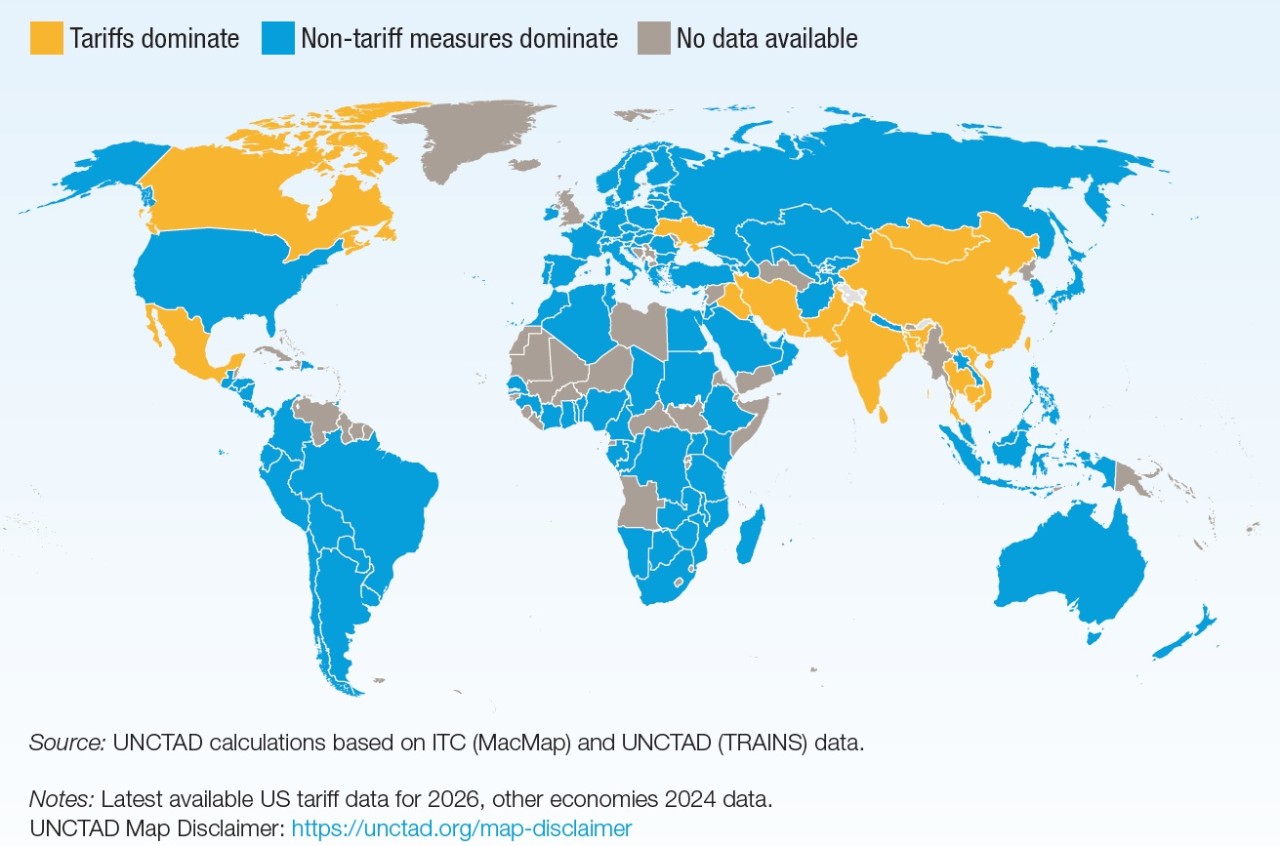
For the first time in decades, notes UNCTAD, tariffs are moving upward across the board. In 2025, global tariffs on exports rose by 10% for developed nations, 16% for developing nations, and 18% for the world’s least-developed countries (LDCs).
However, even with this resurgence of traditional protectionism, UNCTAD’s data reveals that non-tariff measures continue to impose higher costs on exports for 88% of all countries.
These measures, ranging from technical product standards to environmental regulations, now dictate the flow of goods more than taxes ever could.
The burden of this transition is not being shared equally. Smaller developing nations and LDCs find themselves caught in a "double burden" where they face both rising tariffs and astronomical compliance costs. UNCTAD researchers found that LDCs lose approximately 10% of their exports to G20 markets simply because of their "inability to comply with NTMs compared with other developing countries”. This gap is exacerbated by a lack of domestic infrastructure, such as accredited laboratories or certification bodies, forcing exporters to ship goods through third countries just to prove they meet international requirements.
Silent treatment
Furthermore, the document highlights a "diplomatic silence" from the world's poorest nations. While developing countries have recently overtaken developed ones in raising and responding to Specific Trade Concerns (STCs) at the World Trade Organization, the participation of LDCs remains minimal. This absence suggests that these nations are not yet fully equipped to take advantage of the multilateral system to contest the very regulations that limit their growth.
The report notes that "despite their high vulnerability to NTMs, LDCs remain largely absent from the international dialogue”, a factor that significantly hinders their ability to negotiate fairer trade terms.
Even when measures are ostensibly for the public good—such as those protecting health or the environment—their implementation often creates "hidden barriers”.
The report notes that technical NTMs have been on a two-decade rise and are now "more than three times as frequent as all other trade policy interventions combined”.
These requirements shape who trades and what is traded, often favouring larger firms with the financial and technical capacity to navigate shifting regulatory sands. This creates a market where "compliance capacity, rather than price or quality, becomes the primary competitive advantage”.
A significant portion of this trade friction stems from a lack of transparency. When countries fail to notify the WTO of their changing regulations, the economic impact is "comparable to imposing a 28% tariff”. For a small enterprise, these hidden costs are frequently enough to completely exclude them from the global market. UNCTAD suggests that improving transparency alone could reduce trade costs associated with these barriers by nearly 19%, describing it as a "low-hanging fruit" for international policy.
The report also sheds light on the "strategic use of interdependence" in recent trade agreements. Unlike the deals of the past that focused on lowering duties, modern agreements are now "central pillars" for easing regulatory and administrative requirements. For instance, recent US trade deals focus heavily on the recognition of US standards for vehicles, pharmaceuticals, and agri-food products. In contrast, European Union agreements with India and Mercosur emphasise mutual recognition and alignment with broader international standards.
This divergence in regulatory strategy is creating a fragmented global market. UNCTAD warns that "as major economies align their regulatory frameworks with different blocks, the risk of a bifurcated global trade system increases”. For exporters in developing nations, this means managing multiple sets of incompatible standards, which "dramatically increases the cost of diversification" and forces them to choose between major consumer markets rather than serving all of them efficiently.
‘Capacity building for compliance’
Looking ahead, the most significant growth potential may lie in South-South trade—trade between developing nations, according to UNCTAD. However, this potential is currently stifled by weak transparency and a lack of regulatory alignment. In Africa, even a "mild form of regulatory cooperation" where countries simply align the types of measures they apply could reduce trade costs by 30% to 40%. The implementation of the African Continental Free Trade Area (AfCFTA) is cited as a critical opportunity to prove that "regulatory convergence is more effective than mere tariff elimination in stimulating regional value chains”.
The white paper concludes with a call to action for the international community to prioritise "capacity building for compliance”.
It argues that providing technical assistance to LDCs is not merely an act of development aid but a necessity for maintaining a functional global trade system. Without such support, the "invisible walls" of technical regulations will continue to widen the economic gap between the Global North and South.
Ultimately, UNCTAD warns that without a concerted global effort to enhance regulatory cooperation and transparency, these invisible walls risk "eroding the benefits of decades of tariff liberalisation." For the global trade community, the challenge is no longer just about the price of entry, but about the increasingly complex rules of the game. The "unprecedented rise in policy-driven trade costs" leans to a future where trade is defined less by open borders and more by the ability to navigate mandates, certifications, and geopolitical alignments. As the report puts it: "The era of simple trade is over; the era of complex compliance has begun."