Complexity of Hormuz constriction
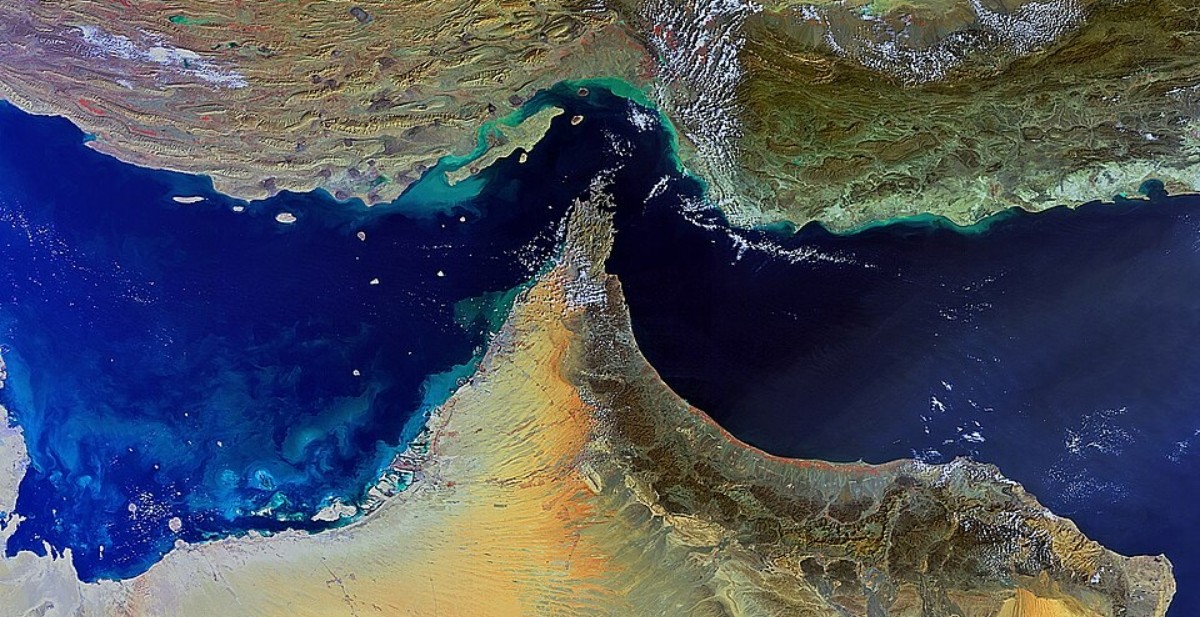
Charterers and owners inadvertently stuck in the Strait have limited options
By Carly Fields
Describing the situation in the Strait of Hormuz as an "incredibly dynamic environment”, Jos Standerwick, head of membership at the Baltic Exchange, yesterday sought to clarify a landscape that has “trapped 1,000+ vessels” and threatens the safety of thousands of seafarers.
Moderating a webinar co-hosted with Maritime London, Standerwick first introduced Saleem Khan, chief data and analytics officer at Pole Star Global, who outlined the stark operational reality on the water.
Khan reported a near-total cessation of legitimate trade. Before the conflict, nearly $1.5 billion worth of oil moved through the region daily; that figure has effectively dropped to zero. While seven or eight vessels recently traversed the Strait bound for India and China, Khan noted that most legitimate activity has halted. The disruption has left approximately 540 oil tankers carrying 314 million barrels of oil—valued at roughly $32 billion—languishing at sea with destinations listed as "awaiting orders".
Adding to the chaos is a surge in digital deception and technical interference. Khan reported that approximately 10% of the 2,500 vessels in the Gulf are exhibiting "AIS anomalies”, including spoofing, jamming, and the disabling of transponders.
He estimated that 75 to 100 vessels are actively spoofing their locations, a number that correlates with the size of the "Iranian shadow fleet".
Khan shared a specific example of the vessel Aquamarine, which appeared to jump across the Gulf at a speed of 102 knots, a "classic sign of spoofing". Furthermore, high-burst radio frequency signals from regional missile defence systems are causing widespread AIS jamming, affecting not just ships but all manner of internet-connected devices.
Attacks and risks
The physical toll of the conflict is already significant. Khan spoke of 26 confirmed attacks on merchant vessels in just two weeks, with most incidents occurring at the entry or exit of the Strait. Twelve crew members have been killed and three remain missing. “The situation is quite dire at sea right now,” Khan said. Beyond the human cost, there is a looming "ecological risk". Many tankers in the Iranian Dark Fleet are well past their average 20-year lifespan, with some exceeding 30 years of age. Khan warned that if one of these vessels were to break up, the resulting spill would dwarf the Exxon Valdez disaster.
From an insurance perspective, the market is adjusting to a total shift in the risk profile. Neil Roberts, head of marine and aviation at the Lloyd’s Market Association, noted that while insurance remains available to facilitate trade, "underwriters had to adjust for that conflict". War risk insurance premiums have increased by nearly 1,000% for some vessels, jumping from 25 basis points to as much as 3% of the vessel’s assessed value. Roberts said that the Joint War Committee has expanded "listed areas" to include previously exempted regions and US bases that are now seen as potential targets. He added that the current lack of movement is not due to a lack of insurance, but rather the judgment of Masters that "the position is unsafe for their crews and their vessels".
The legal and contractual implications are equally complex.
Michael Ritter, a partner at HFW, noted that while the situation meets the definition of "warlike operations”, there is no simple alternative route for vessels bound for the Arabian Gulf.
Unlike the Red Sea crisis, where ships could reroute around the Cape of Good Hope, the Strait of Hormuz is the "only one route in and out". This unique geography creates uncertainty regarding owner compensation for delays and the potential for "blockade" claims. Ritter said that while most charter parties dated before February 28 allow owners to refuse orders to dangerous ports, parties are now debating who pays the "large delta" between original insurance premiums and current skyrocketing rates.
Pipeline only a partial fix
The industry is also exploring limited alternatives to the Strait, the speakers said. Some oil is being rerouted through the Saudi East-West pipeline to the port of Yanbu on the Red Sea. However, while Saudi Aramco has claimed a capacity of 7 million barrels per day for this route, Khan suggested the reality is closer to 5 million, which is "just a fraction of what typically goes through the Strait".
“The reality is that both of those pipelines combined are not exactly an alternative to the Strait. We do need the Strait to be opened up, otherwise we will continue to see either a slowdown in production, a complete halt to production, or we'll just see vessels continuing to wait at docks right in the Persian Gulf,” he said.
Ritter added that, as of mid-March, Yanbu is generally considered a "safe alternative port”, though rerouting involves its own legal hurdles regarding bills of lading and deviation.
“At least as things stand, an owner that's perhaps under long term time charter that has trading limits that includes those regions would probably be obliged to accept those orders from their charterer.”
“If you have a cargo loaded on board as an owner and charterer, and you've got Bill of Lading issues for specific discharge ports that are not Yanbu or in the region, you will have legal issues arising in terms of potentially deviation and needing the consent to call under the war risk clauses,” Ritter said.
Looking forward, the prospect of naval escorts remains a point of discussion but lacks clear detail. Roberts noted that while the US has offered potential support linked to escorts, the specifics remain "scant". He argued that the "easiest way to break everyone out of the region and give safety would be a negotiated ceasefire".