Flexibility defines shipping’s fuel future
Adaptability is now the sector’s most valuable asset when it comes to alternative fuel adoption
By Carly Fields
The maritime industry has spent the past decade debating which fuel will ultimately dominate the journey to net zero. According to DNV’s latest Maritime Forecast to 2050, however, that may be the wrong question entirely. The key message from the newly-released report message is not that LNG, methanol, ammonia, biofuels, or e-fuels will emerge as clear winners, but that uncertainty itself has become a defining feature of the transition, forcing shipowners to build strategies capable of succeeding across multiple possible futures.
As DNV CEO Maritime Cristina Saenz de Santa Maria notes in the report’s foreword: “Dealing with uncertainty and preparing for multiple possible futures remains one of the most important strategic capabilities.” She adds: “Rather than relying on a single view of the future, the industry should focus on building strategies capable of adapting as conditions evolve.”
That conclusion is particularly significant given the backdrop facing vessel operators today. Regulatory negotiations at the International Maritime Organization remain unresolved, regional measures such as FuelEU Maritime and the EU ETS are already influencing fuel choices, and the economics of low-GHG fuels continue to evolve.
For shipowners making investment decisions on vessels that may remain in service beyond 2050, committing to a single fuel pathway represents an increasingly risky proposition.
Technology uptake accelerating
The report notes that the share of alternative-fuel-capable tonnage has increased dramatically since 2020, with alternative fuel-capable gross tonnage rising from just 0.4% of the global fleet to 5.2% by August 2026. The number of vessels capable of using alternative fuels has increased more than sixfold during the same period.
Yet those headline figures mask a more complex reality. While LNG and methanol dominate current investment activity, neither fuel has established itself as the definitive long-term solution. DNV notes that “LNG and methanol dominate the fleet’s alternative fuel technology mix, installed capacity is not fully utilised.”
The report shows that LNG remains the leading alternative fuel technology, supported by 1,742 LNG-capable ships in operation and a substantial orderbook. Methanol capability is also expanding rapidly, especially among container shipping companies. At the same time, ammonia projects are progressing, hydrogen applications are emerging in niche markets, and battery-powered vessels continue to gain traction in short-sea trades.
This diversity of solutions highlights why flexibility is becoming more valuable than fuel certainty.
Even by 2050, DNV expects the fleet to remain characterised by multiple fuel pathways rather than convergence around a single dominant option.
Moreover, actual fuel use today remains significantly below available technical capacity. Between 2019 and 2024, LNG-capable vessels outside the LNG carrier segment used only 32% to 52% of their potential LNG consumption capacity, while methanol utilisation remained even lower.
The implication is that installing alternative-fuel capability may ultimately prove more important than maximising use of any specific fuel in the near term.
Efficiency the universal hedge
Anther finding of the report is the energy efficiency continues to deliver value regardless of which fuel ultimately prevails. “Together, more than 50 operational and technical efficiency measures provide the foundation for reducing energy use and emissions across the fleet,” the report states.
DNV estimates that energy-efficiency measures and speed reductions could reduce fleet energy consumption by as much as 16% by 2030 and as much as 25% to 28% by 2050 relative to business-as-usual scenarios.
This matters because lower energy demand improves the economics of every alternative fuel pathway. Whether operators ultimately consume biofuels, low-GHG methane, methanol, ammonia, hydrogen or e-fuels, less fuel consumption translates into lower compliance costs and reduced exposure to volatile fuel markets.
As a result, energy efficiency becomes a strategic tool for preserving flexibility. Shipowners can invest in efficiency now while delaying more irreversible decisions on fuel choices until greater clarity emerges.
DNV also reinforces the argument for flexibility, noting that the future market for low-GHG fuels will be “shaped by developments in both shipping and other sectors”.
Shipping is only one participant in a much larger competition for low-carbon energy resources. Aviation, heavy industry, power generation, road transport and buildings will all seek access to various low-GHG fuels and feedstocks. Biofuels, which currently offer some of the most attractive abatement costs, face supply constraints because their biomass feedstocks are needed across multiple sectors.
DNV estimates that global low-GHG fuel supply could potentially reach 270 million tonnes of oil equivalent by 2030.
However, projected shipping demand ranges from 4 Mtoe to 22 Mtoe in 2030, depending largely on regulatory developments. By 2050, shipping demand could range anywhere between 33 Mtoe and 185 Mtoe.
The report also highlights that fuel price competition will extend well beyond the maritime sector. In a net-zero world, total non-maritime demand for low-GHG fuels could exceed 2,100 Mtoe by mid-century. Under such conditions, fuel availability may become just as important as fuel price.
No single global fuel price
Perhaps the clearest warning against betting on a single fuel future comes from DNV’s analysis of future fuel pricing. “Even in a mature market, we do not expect a single global price to emerge for low-GHG fuels across different fuel types,” the report states. “Prices are instead likely to remain differentiated and at least partly decoupled.”
This finding challenges assumptions that fuel markets will eventually settle into predictable patterns akin to today's conventional bunker market.
Different fuels will be produced through different pathways, with different feedstocks, conversion efficiencies, infrastructure requirements and carbon intensities. Regional variations will further complicate pricing mechanisms. As a result, future ship economics may depend heavily on fuel optionality.
Vessels capable of switching between fuel types could benefit from lower-cost alternatives as market conditions change, while operators locked into a single pathway may face greater exposure to price spikes or supply shortages.
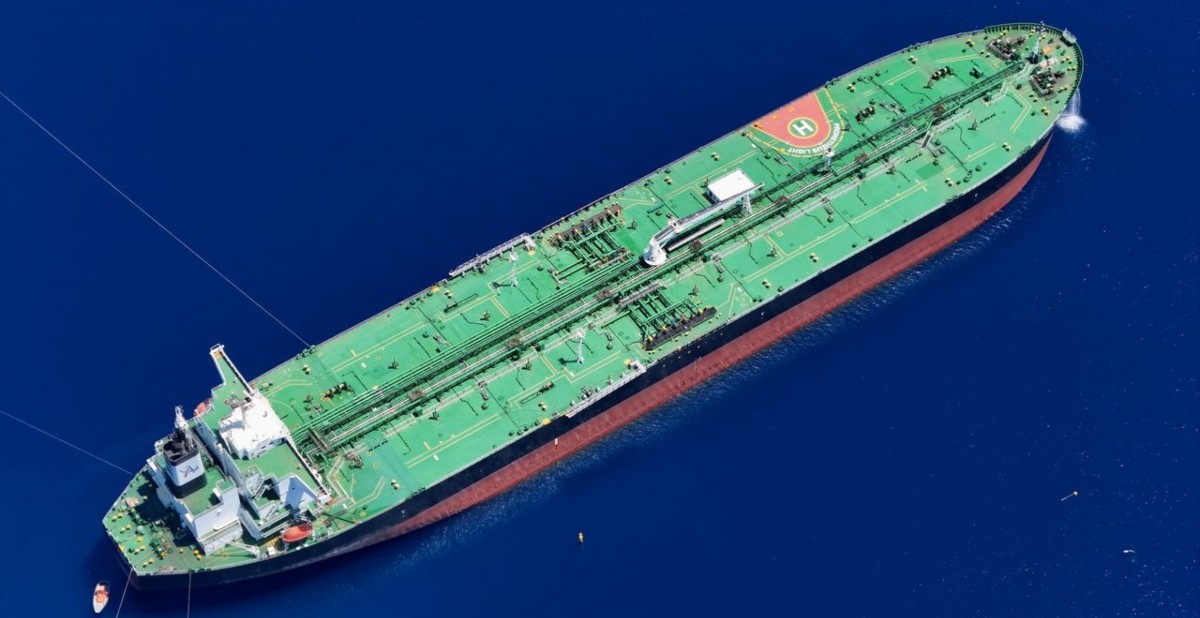
To test its theory, the report provides an illustrative example using a shipowner operating a fleet of five Very Large Crude Carriers.
The study compares two strategies. The first continues using conventional scrubber-equipped vessels fuelled by high-sulphur fuel oil. The second gradually phases in dual-fuel LNG tonnage combined with more ambitious efficiency measures.
Under a “slow transition” scenario characterised by limited regulatory tightening and modest fuel market development, the conventional scrubber strategy outperforms on cost. But under a “rapid transition” scenario featuring stronger regulation and accelerated adoption of low-GHG fuels, the LNG strategy becomes the superior option.
DNV’s conclusion is that “no single strategy is clearly preferable across all the scenarios considered”.