UK maritime ETS countdown begins
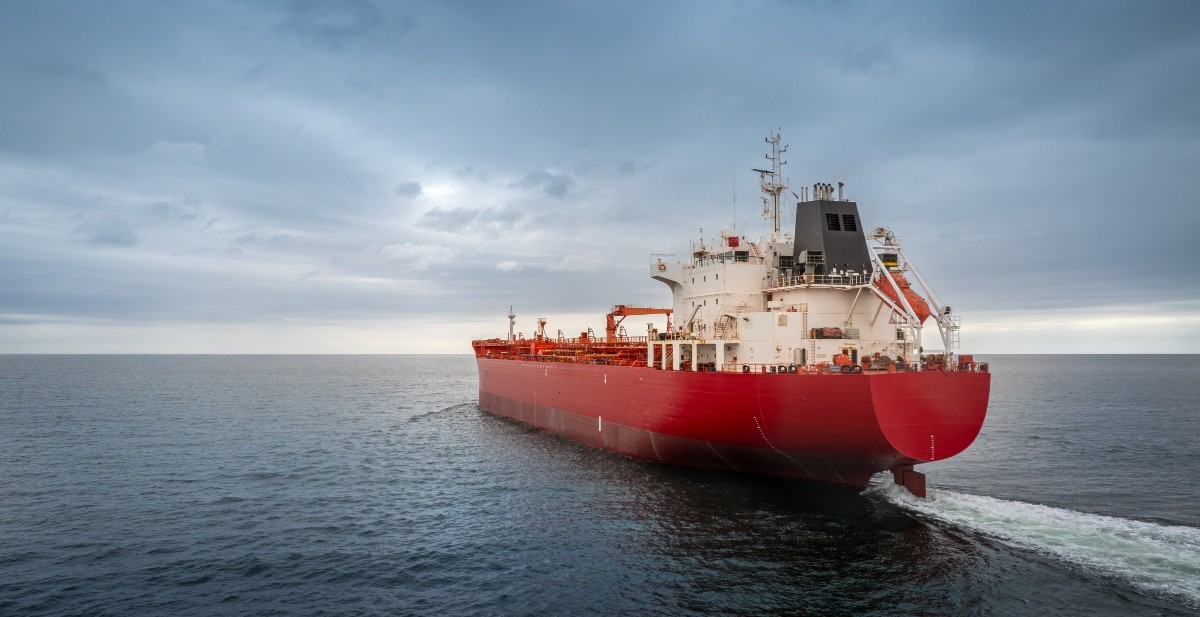
UK ETS maritime expansion signals new compliance era for ship operators
By Carly Fields
The UK’s decision to extend its Emissions Trading Scheme (UK ETS) to maritime transport from July 1, 2026 marks a significant shift in the regulatory landscape for shipping, introducing a company-level carbon compliance regime that operators must begin preparing for now.
In the latest edition of DNV’s Maritime Impact podcast, Eirik Nyhus, director, environment for maritime at class society DNV, outlined the practical implications of the new framework, highlighting both the compliance requirements and the outstanding uncertainties that remain ahead of implementation.
“This is more than just another reporting obligation," Nyhus said.
“For operators in scope, the UK ETS introduces a company-level compliance regime with new requirements for emission monitoring, reporting, verification and ultimately the surrender of allowances.”
The new rules will initially apply to cargo and passenger vessels of 5,000 gross tonnage and above operating on domestic UK voyages. Offshore vessels will be brought into scope later, from January 1, 2027. While the legal framework has now been established, maritime companies face a relatively short timeframe to ensure systems, procedures and reporting structures are ready.
A key feature of the UK approach is the requirement for operators to establish an approved Emissions Monitoring Plan (EMP). Unlike the EU ETS, which relies on vessel-specific documentation, the UK framework adopts a company-wide model. Operators must submit a single EMP covering all vessels under their responsibility, detailing monitoring methodologies, emission sources and calculation approaches.
Nyhus explained that approval for an EMP can be sought at any time but no later than 42 days after a company undertakes a maritime activity falling within the scope of the scheme. The process will be managed through the UK’s digital Maritime Emissions Trading Scheme (METS) platform and the UK ETS Registry.
The introduction of the UK ETS maritime regime also coincides with the end of the previous UK Monitoring, Reporting and Verification (MRV) framework. That system was revoked on April 3, 2026, with residual reporting obligations being absorbed into the new ETS structure from July 1.
“This means there are no reporting obligations for the period April 3 to June 30,” Nyhus noted, describing the shift as a move into “a new architecture for emissions compliance”.
Operational impacts
Although the scope of the scheme is relatively narrow, its impact on operational planning could be substantial. The UK ETS will cover emissions generated on domestic voyages between UK ports, including voyages that begin and end at the same UK port. Importantly, emissions generated during port calls are also covered.
“One practical consequence is that emissions from port stays on international routes are also captured under the UK ETS,” Nyhus said. “So even where the voyage itself may be outside the scope, the port call in the UK will still create a surrender obligation for those in-port emissions, as long as the ship itself is in scope.”
The framework also includes several route-specific provisions. Voyages between Northern Ireland and Great Britain will carry a 50% surrender obligation for voyage emissions, while port stays in both locations remain subject to a full 100% surrender requirement. Meanwhile, voyages between the UK and ports outside the European Economic Area, including UK Overseas Territories and Crown Dependencies, are excluded because they are not treated as domestic voyages.
Like the EU ETS, the UK system covers carbon dioxide, methane and nitrous oxide emissions from combustion processes, as well as methane slip calculated using a tank-to-wake methodology. Methane and nitrous oxide will be reported using IPCC AR5 global warming potentials, ensuring broad alignment with European carbon accounting methods.
However, while the emissions scope closely mirrors that of the EU ETS, the implementation architecture differs in several noteworthy respects, Nyhus said.
Under the UK system, EMPs are submitted directly to regulators instead of undergoing pre-assessment by an accredited verifier. Verification instead focuses on the Annual Emissions Report (AER), which must be submitted by March 31 each year and independently verified by a UK Accreditation Service-accredited verifier.
Operators must then surrender allowances corresponding to verified emissions by April 30 annually. For the inaugural compliance period, reporting will cover only emissions generated between July 1 and December 31, 2026. The associated surrender deadline will fall on April 30, 2028, combined with surrender obligations for emissions generated during 2027.
Responsibility for compliance rests primarily with the registered owner of a vessel. Nevertheless, this responsibility can be transferred to the International Safety Management (ISM) company where a legally binding agreement exists. In such cases, details of the arrangement must be entered into the METS system, Nyhus explained.
Another departure from the EU model is the absence of an onboard Document of Compliance.
“Unlike the EU ETS, the UK ETS does not require a Document of Compliance to be carried on board,” Nyhus explained. “Instead, compliance is handled digitally through METS and the UK ETS Trading Registry.”
Unanswered questions
Despite the framework now being operational, several important questions remain unanswered. Nyhus identified fuel eligibility, emissions reduction claims and certification requirements as areas where greater regulatory clarity is still needed.
“The challenge is operationalisation – in other words, translating legal text into clear, consistent, workable rules for real ships, real voyages and real reporting systems,” he said.
Current uncertainties include which fuels qualify when regulations are silent, whether lists contained in Annex A should be interpreted as exhaustive, and how the UK authorities intend to recognise voluntary certification schemes in future. Additional questions surround the relationship between the UK ETS and sustainability criteria under the EU Renewable Energy Directive (RED).
According to Nyhus, these issues have practical significance because they influence not only fuel eligibility but also the evidence operators must retain and the methodologies verifiers are expected to apply.
Proof requirements also remain under discussion. Industry participants continue to seek clarification regarding acceptable forms of evidence, including whether Proofs of Sustainability, Proofs of Compliance or supplier declarations will be recognised, and whether copies of documentation are sufficient.
Further complexity may emerge from future political developments. Both the UK and EU have previously indicated an intention to align their respective emissions trading systems, although implementation timelines remain uncertain.
“Negotiations have started, but look to be taking a while, and my guess is that the likely earliest practical year for alignment to happen would be 2028,” Nyhus said. “What practical changes this will lead to remains to be seen.”
For shipowners operating across both UK and European trades, the result is an increasingly complex compliance environment. While the UK and EU regimes share common principles, they differ sufficiently in structure and execution to require dedicated management processes.
“The UK ETS maritime extension is important not only because it adds a new compliance obligation, but because it reflects the continued development of regional market-based measures in shipping,” Nyhus observed. Operators, he added, are now “increasingly navigating overlapping carbon frameworks with different boundaries, timelines, tools and evidentiary requirements.”
As the July 2026 start date approaches, Nyhus’s message is simple: “Get ready as soon as you can,” he said. “Get your data and roles in order, and keep a close eye on the evolving guidance and interpretations being published by the UK authorities.”