Baltic Exchange participates in INTERCEM Shipping Forum 2026
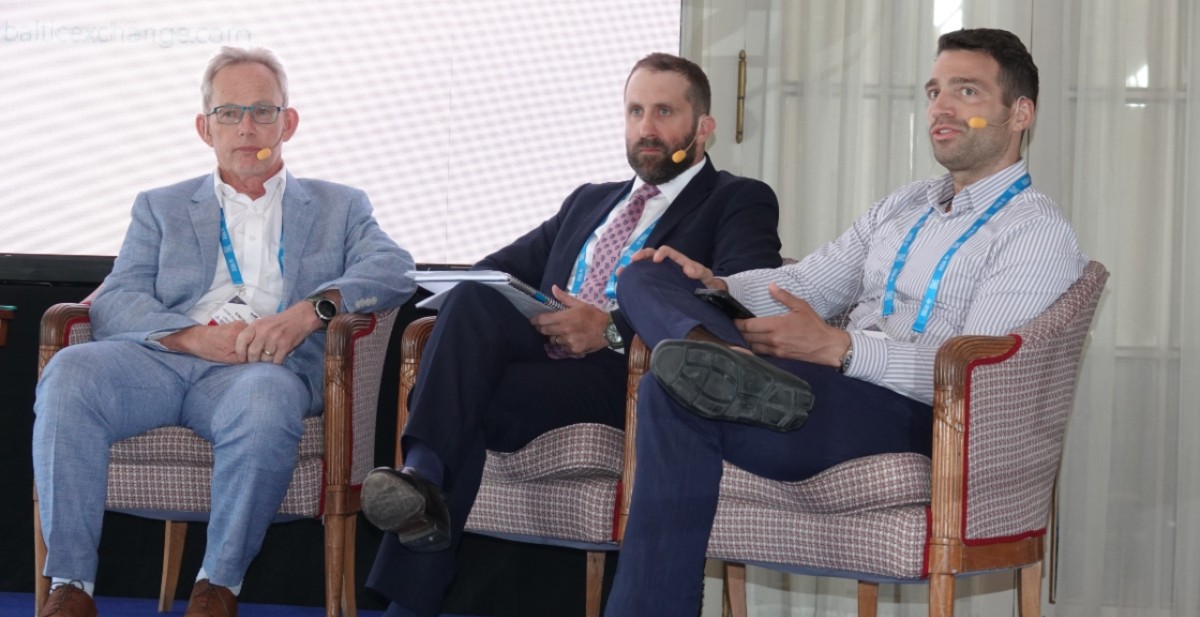
At the INTERCEM Shipping Forum in Naples, Jos Standerwick, Baltic Head of Membership, participated in a discussion with Dimitrios Georgantis and Simon Cox of Howe Robinson Partners, and also a member of the Baltic Membership Council, examining the forces likely to shape dry bulk shipping over the coming years. While freight markets and trade flows remain central to industry performance, the discussion focused on two themes increasingly influencing commercial decision-making: geopolitics and decarbonisation regulation.
Geopolitical developments continue to reshape established trading patterns. Sanctions, regional conflicts, changing alliances and shifting commodity supply chains are altering cargo flows and creating greater uncertainty for market participants. The panel discussed the complexity in assessing sanctions risk in the dry bulk market and the view that the use of sanctions as a tool of foreign policy was only set to continue. Consideration was then given to how shipping businesses are increasingly required to assess political and compliance risks alongside traditional market fundamentals, with adaptability becoming a key competitive advantage.
Decarbonisation regulation was the second major area of discussion. Measures such as the EU Emissions Trading System (EU ETS) and FuelEU Maritime are now having a direct impact on commercial operations, voyage costs and investment decisions, in the cement carrier and dry bulk markets and the role of the IMO in mandating a globally coordinated approach and what the likelihood and nature of a Net Zero Framework for Shipping may be.
A recurring theme throughout the session was that shipping is operating in an increasingly complex environment where regulatory, political and commercial factors are inherently intertwined. Success will depend on the industry's ability to navigate and where possible capitalise on uncertainty while continuing to facilitate the efficient movement of global trade.
The discussion provided a valuable opportunity to exchange views with stakeholders from across the cement and maritime sectors and highlighted the importance of collaboration as shipping adapts to a rapidly changing global landscape.