Supply chain disruptions take centre stage at Shipping UK Forum
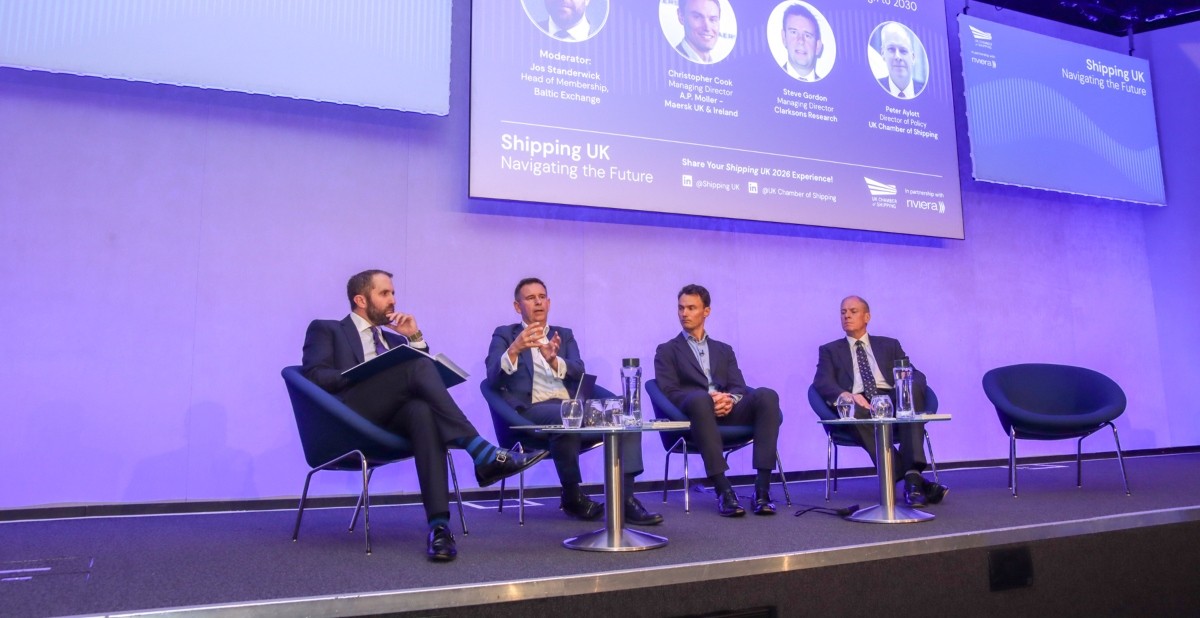
Global supply chain challenges may have shifted from disrupting shipping markets to actually driving demand, a panel of UK shipping experts recently discussed at the recent Shipping UK Conference, hosted by the UK Chamber of Shipping, on 6 October.
Moderated by the Baltic's Head of Membership Jos Standerwick, the panel explored whether market disruption is now priced into the global freight market and how shipping companies can plan for the long term while staying agile in the short term.
Joining Jos were Stephen Gordon, managing director of Clarksons Research; Christopher Cook, managing director of Maersk UK & Ireland; and Peter Aylott, director of policy at the UK Chamber of Shipping. While the panel agreed that uncertainty persists across most shipping markets, the next five years will be defined by the growth of seaborne trade, particularly for container, gas and automobile cargoes, and that the wider industry needs to be prepared for this near future.
One key change the panel highlighted was the likely increase in vessel transits needed to move key commodities. Due to geopolitical disruption, the global supply chain needs greater levels of tonnage that it did just 15 years ago. The panel also discussed some of the other key issues facing the global supply chain in the near future, including the impact of sanctions, the dark fleet and an ageing global tonnage profile.
However, the panel noted that most constraints have moved away from commercial vessels to onshore challenges. This is particularly notable for LNG, which is facing continued vulnerability in its onshore production facitilies in the Middle East. While crude oil has been able to find workarounds due to global disruption, LNG requires more specialised vessels and crew in order to keep cargoes moving freely at a time when demand is growing towards 2030.
The session concluded with agreement on one thing: shipping has endured and will continue to endure. Despite the many storms it faces, the maritime industry remains a reliable cornerstone of the global supply chain. As Jos noted at the end of the panel: "commerce has once again proved steadier than politics".
Baltic Exchange would like to extend our thanks to the UK Chamber of Shipping for inviting us to be part of this important day of discussions and we look forward to continuing the conversation with the wider industry moving forward.